


A recent study investigated this question using a Nb-added CoCrNiNb0.12 multi-principal element alloy produced by selective laser melting, or SLM, by heat treatment.
The study was published in Materials Science & Engineering A under the title “Strengthening and deformation mechanisms of selective laser melted CoCrNiNb0.12 multi-principal element alloy by constructing δ nano-precipitate and stable cellular structure.”
Researchers at Beihang University investigated the alloy using a combination of microstructural and mechanical characterization methods. A CIQTEK FESEM 4000X field-emission scanning electron microscope operating in backscattered electron, or BSE, mode was used to observe the microstructural characteristics.
The study shows that a stable Nb-rich cellular structure, together with nanoscale δ precipitates formed after annealing, provides an effective route to strengthening the alloy from room temperature down to 77 K.
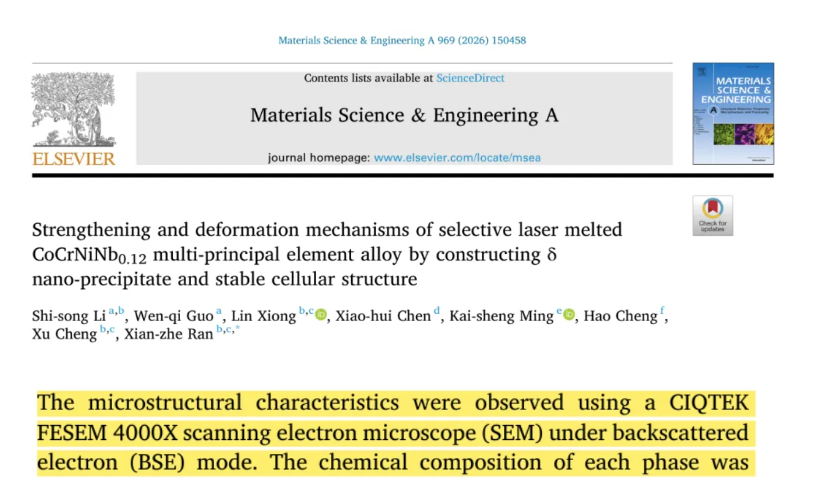
Figure 1. Study of SLM CoCrNiNb0.12 Alloy Using CIQTEK FESEM 4000X
Why Strengthen CoCrNi-Based Alloys?
CoCrNi multi-principal element alloys feature a face-centered cubic, or FCC, solid-solution matrix and show strong mechanical performance at low temperatures.
However, insufficient yield strength can limit their use in engineering applications. At the same time, increasing strength while retaining useful ductility remains an important challenge, especially under cryogenic conditions.
In this work, the researchers combined selective laser melting with Nb alloying and subsequent annealing to regulate the cellular microstructure and precipitation behavior of CoCrNiNb0.12.
As-Deposited Microstructure: Stable Nb-Rich Cellular Networks
Rapid solidification during SLM produced fine grains with an average size of approximately 33 μm. Inside the grains, a clear cellular structure with a characteristic size of approximately 0.44 μm was observed.
Strong Nb segregation was found along the cellular boundaries, together with irregular Nb-rich precipitates. Selected-area electron diffraction identified these block-like Nb-rich precipitates as a hexagonal C14 Laves phase.
A large number of dislocations were also distributed within the cells and along the cellular boundaries. The Nb-enriched cellular network, precipitates, and associated dislocation structures provided important initial strengthening in the as-deposited alloy.
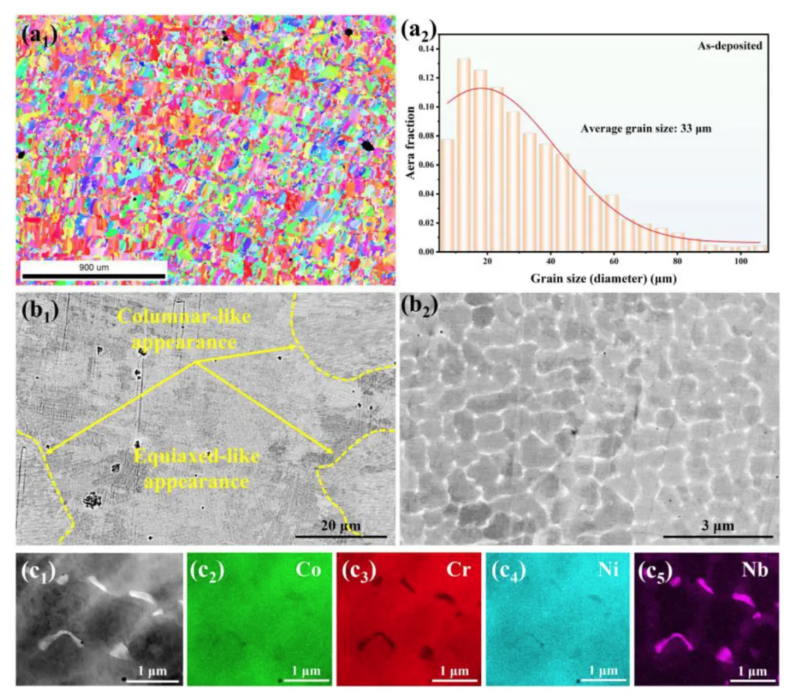
Figure 2. Microstructure and Element Distribution of the As-Deposited CoCrNiNb0.12 Alloy
Annealing Promotes δ Nano-Precipitation
The alloy was then annealed at 750°C for 10 hours. This condition is referred to as TM-750.
After annealing, the average grain size increased only slightly to approximately 36 μm, with no obvious recrystallization. The cellular structure remained clearly visible, with a characteristic size of about 0.51 μm.
The amount of C14 Laves phase increased after annealing. More importantly, a high density of needle-like precipitates enriched in Nb and Ni formed along the cellular boundary regions.
Diffraction analysis identified these needle-like precipitates as an ordered orthorhombic δ phase. Two δ variants were observed, maintaining specific orientation relationships with the FCC matrix.
The Nb-rich cellular boundaries provided favorable sites for δ-phase nucleation. At the same time, the in-situ δ precipitates helped restrict dislocation motion and interfacial evolution, further stabilizing the cellular structure.
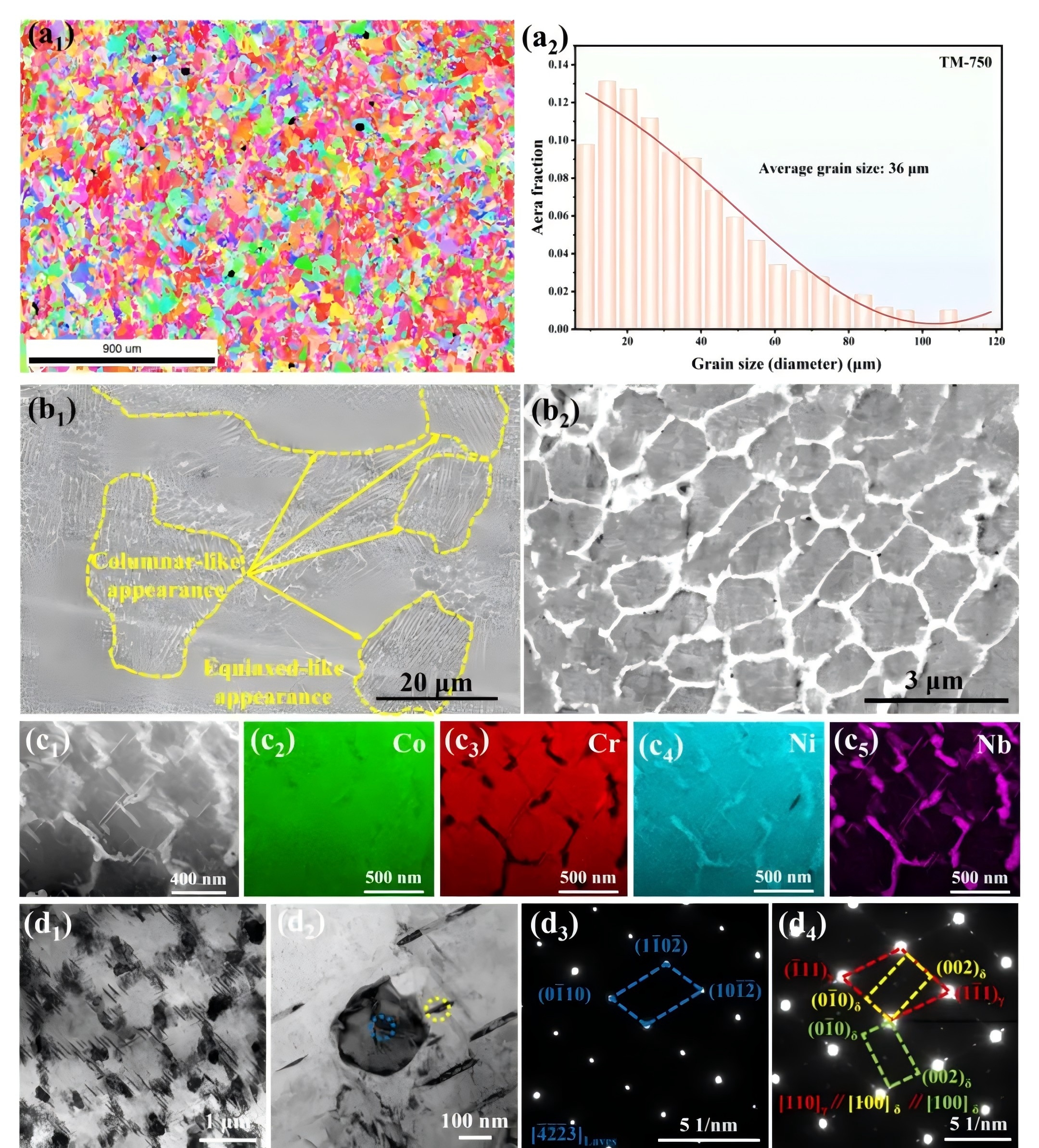
Figure 3. Microstructure and δ-Phase Precipitation after 750°C Annealing
Higher Strength at Room and Cryogenic Temperatures
At room temperature, the as-deposited alloy showed a yield strength of 943 MPa, an ultimate tensile strength of 1082 MPa, and an elongation of approximately 4.9%.
After the TM-750 treatment, the room-temperature yield strength increased to 1002 MPa, while the ultimate tensile strength reached 1290 MPa. Elongation also increased to 5.6%.
When the test temperature was reduced from 298 K to 77 K, strength increased further. For the TM-750 alloy, the yield strength reached 1292 MPa and the ultimate tensile strength reached 1579 MPa.
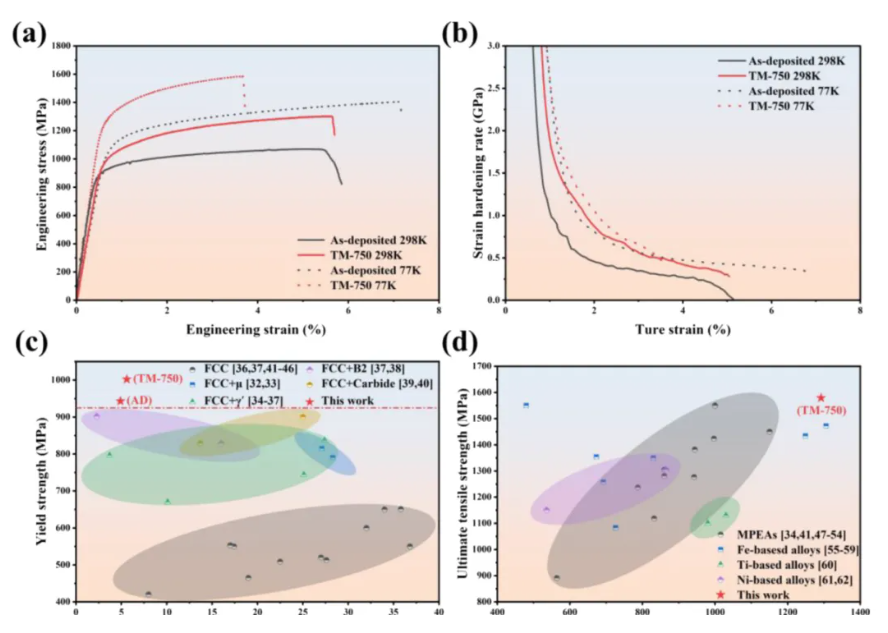
Figure 4. Tensile Properties of CoCrNiNb0.12 Alloy at 298 K and 77 K
How the Alloy Deforms
Microscopy after tensile deformation revealed different deformation behavior at room and cryogenic temperatures.
At room temperature, dislocations accumulated along the cellular boundaries and were pinned by both the Laves phase and δ precipitates. Interactions between stacking faults also produced a large number of Lomer-Cottrell dislocations.
Some dislocations were observed to shear the nanoscale δ precipitates. This helped relieve local stress and strain concentration, allowing the alloy to retain a degree of plasticity while maintaining a high yield strength.
At 77 K, deformation produced high-density stacking faults and nanoscale deformation twins. However, δ precipitates interrupted the continuous FCC matrix and restricted the long-range propagation of deformation twins and stacking faults.
As a result, twin lengths became shorter and stacking faults accumulated locally around δ precipitates. The study attributes the reduction in the low-temperature elongation of TM-750 to 3.2% to this interaction.
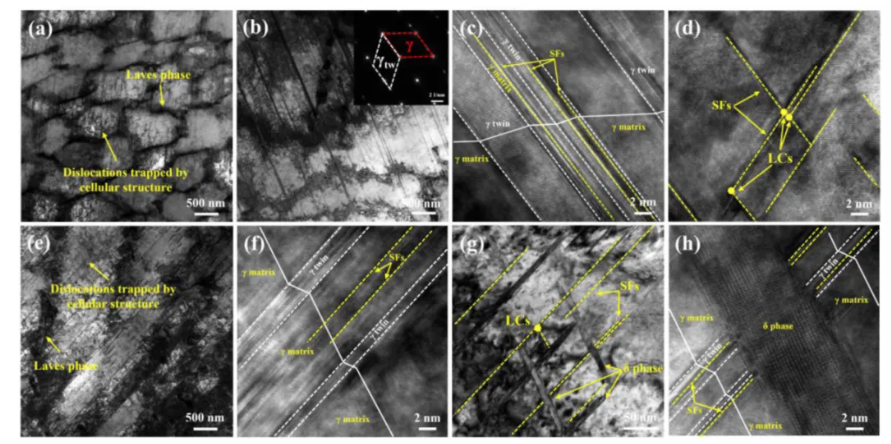
Figure 5. Deformation Microstructure of CoCrNiNb0.12 Alloy after Tensile Testing at 77 K
Quantifying the Strengthening Mechanisms
To quantify the origin of the high strength, the researchers separated the yield strength into contributions from lattice friction, solid-solution strengthening, grain-boundary strengthening, dislocation strengthening, and precipitation strengthening.
In the as-deposited alloy, dislocation strengthening was the dominant contribution and accounted for more than 50% of the yield strength.
Annealing at 750°C reduced the dislocation density and therefore lowered the contribution from dislocation strengthening. However, the high density of nanoscale δ precipitates introduced approximately 409 MPa of precipitation strengthening.
This additional precipitation strengthening compensated for the reduction in dislocation strengthening and helped the TM-750 alloy achieve higher yield strength at both room and cryogenic temperatures.
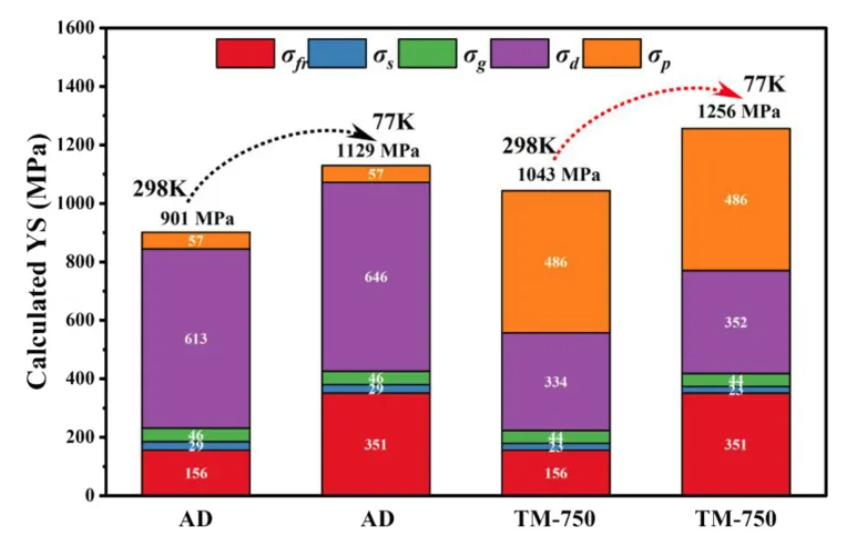
Figure 6. Contributions of Different Strengthening Mechanisms to Yield Strength
What the Study Shows
The study demonstrates that combining selective laser melting with controlled heat treatment can create a stable cellular structure together with nanoscale δ precipitates in CoCrNiNb0.12.
The cellular structure provides initial strengthening through Nb segregation, precipitates, and dislocation interactions. Subsequent δ precipitation further increases yield strength, while its interaction with dislocations, stacking faults, and deformation twins changes the deformation response at different temperatures.
By using CIQTEK FESEM 4000X to examine the microstructure and phase distribution, the researchers were able to connect the alloy's cellular and precipitation structures with its mechanical behavior. The results provide a useful reference for designing additively manufactured multi-principal element alloys for applications requiring high strength from room to cryogenic temperatures.