CIQTEK Unveils TEM-F200: 200 kV Field Emission TEM
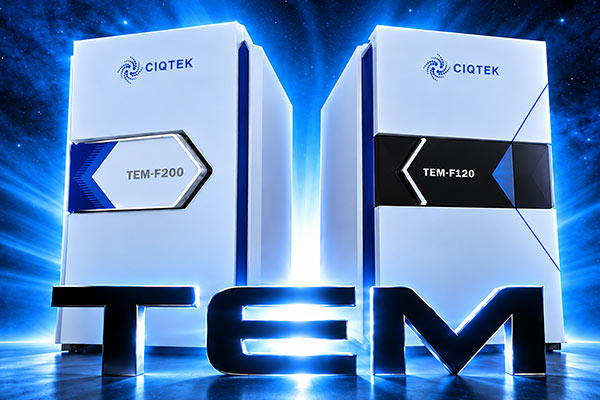
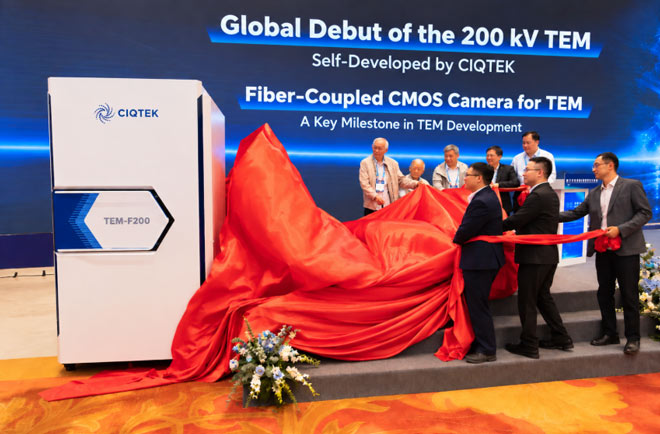
CIQTEK has officially launched its 200 kV field emission transmission electron microscope, TEM-F200, delivering 0.10 nm information resolution and featuring several key subsystems developed in-house. Unveiled on October 18 at the 2026 National Electron Microscopy Annual Conference in China, the TEM-F200 is designed for demanding work in materials science, semiconductor research, and nanoscale characterization. The launch also marks another step toward a more complete domestic TEM platform, from key hardware to imaging and analysis workflows. Built Around Resolution, Stability, and Practical Use For TEM users, resolution is only part of the story. Stability, ease of operation, detector performance, automation, and service all affect what the microscope can actually deliver day-to-day. The TEM-F200 combines a 200 kV field emission electron source with a self-developed high-voltage power supply and optical system. TEM-F200 Key Specifications 200 kV Field Emission Transmission Electron Microscope Acceleration Voltage 20 to 200 kV Information Resolution 0.10 nm Point Resolution 0.25 nm STEM Resolution 0.16 nm STEM Detector Modes HAADF, ADF, ABF Magnification 20× to 1,200,000× Super-EDS Optional dual 100 mm² windowless SDD detectors with symmetrical geometry, energy resolution ≤127 eV Optional Configurations EELS, 4D-STEM, 3D-ED, in situ sample holder A thermostatic water-cooled objective lens and four-axis sample stage help support stable imaging, while automated aperture control, position memory, and one-click adjustment are designed to reduce repetitive manual work. The main imaging camera is CIQTEK’s self-developed 16-megapixel fiber-coupled CMOS camera, built specifically for TEM use. The camera combines a 9 μm CMOS sensor, 4K × 4K imaging, and up to 24 fps at full resolution. Less Time at the Controls, More Time on the Sample The TEM-F200 also puts a strong focus on workflow. Fluorescent-screen images can be transferred directly to the PC display, while high-voltage control, electron-gun auto-start, vacuum operation, sample-position auto navigation, and STEM detector movement can all be integrated into the system workflow. For laboratories that need more flexibility, the platform can also be expanded with EDS, EELS, 4D-STEM, 3D electron diffraction, side cameras, cryogenic components, and in situ holders. From FinFET Devices to Advanced Alloys The new system has already been demonstrated on a range of demanding samples. For semiconductor FinFET devices, local nanoscale features and fine lattice structures were clearly resolved, with FFT analysis showing a spacing down to 1.045 Å. Semiconductor FinFET Cross-sectional imaging of semiconductor memory chips clearly revealed multilayer thin-film and dielectric structures. For 7075 aerospace aluminum alloy, TEM-BF and STEM-HAADF imaging resolved nanoscale precipitates, discontinuous grain-boundary phases, and precipitate-free zones. The system was also used to e...
October 26, 2026

















 انضم إلينا
 اتصل بنا
 صفحة لينكد إن


